
A Silent Flow of Time in Old Wenzhou — The Architectural Narrative and Urban Sanctuary of Taoqing Raku Hotel
Wenzhou, a city often dubbed the “Oriental Jews” for its mercantile prowess, seems to exist in a constant state of restless outward expansion. Its people are always on the move, leaving their footprints across the globe, while the authentic local dialect and heritage are frequently drowned out by the noisy background track of modern times. However, when you navigate to Xiaobafang in Wenzhou’s old city, a completely different dimension of time quietly unfolds. This is the home of Taoqing Raku Hotel—a collective memory reinterpreted through architectural language, and an urban sanctuary where time slows down.
Rebirth from Ruins: A Local Echo of Emotion and Materiality
It is hard to imagine that this building, radiating a captivating Eastern wabi-sabi aesthetic and modern minimalism, was originally a neglected garbage dump and a cluster of dilapidated houses in an old residential area. Driven by a deep-rooted devotion to his hometown, the Wenzhou-native founder spent two full years and 8 million RMB to tear it down and rebuild it from scratch. “I just wanted to use my childhood memories as a clue to create a truly thoughtful urban escape,” says the founder.
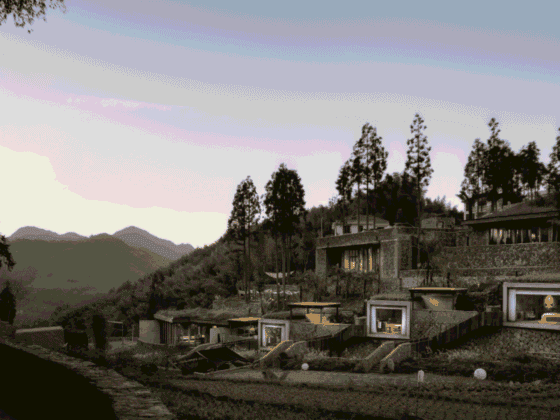
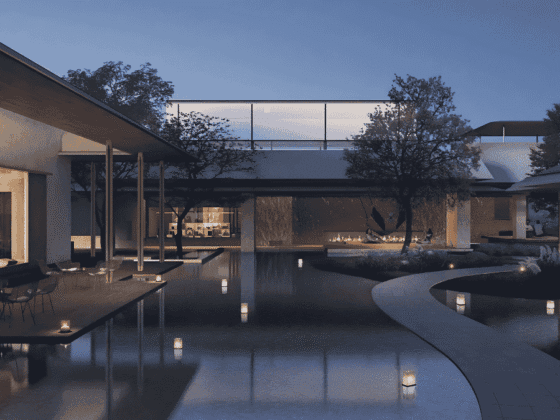
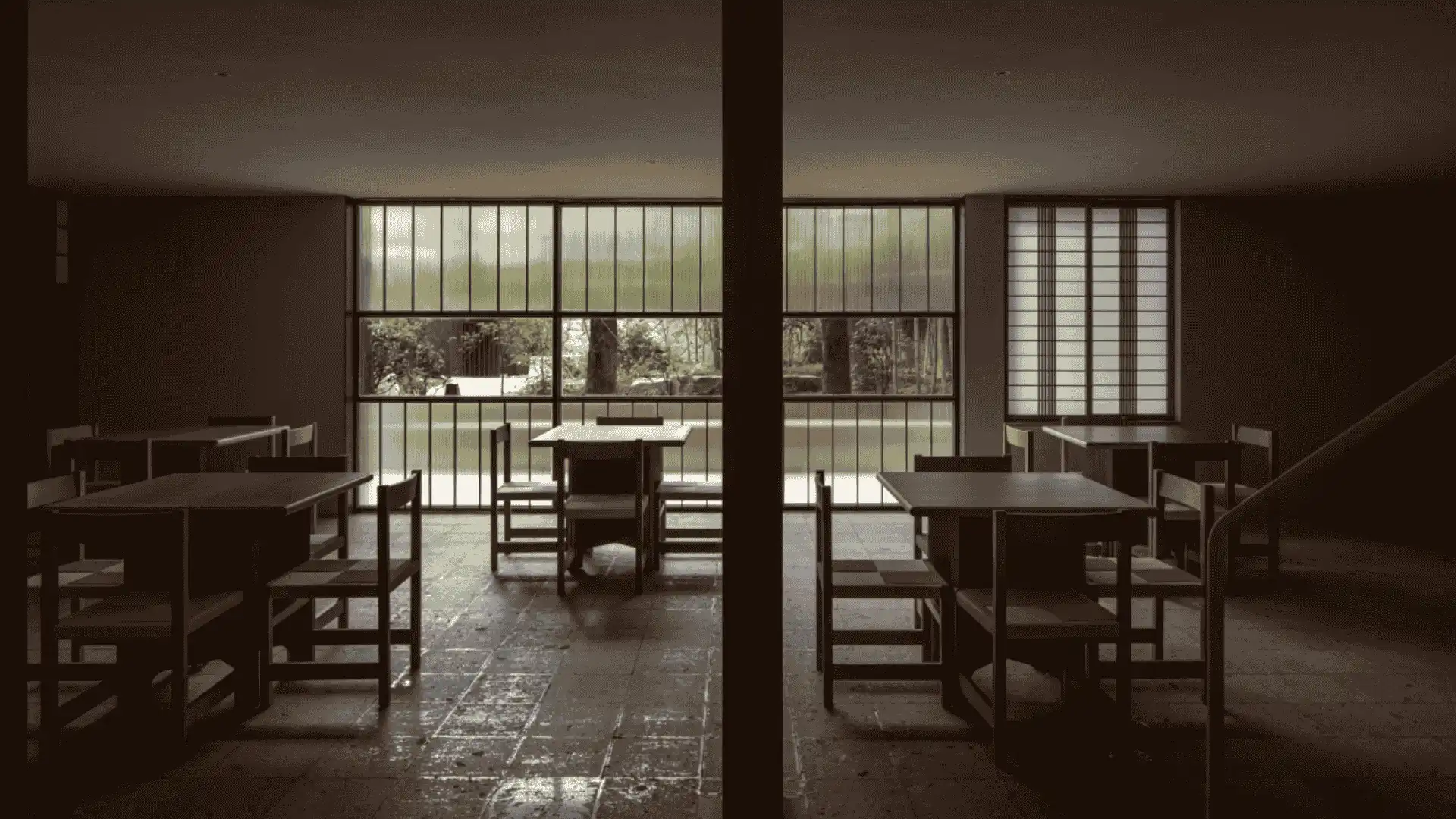
Here, the design does not deliberately pander to ancient symbols, nor does it blindly pursue avant-garde flamboyance; instead, it gently responds to tradition with a modern touch. The architects demonstrated admirable craftsmanship: the exterior facade utilizes a fading traditional coastal building material—oyster ash, calcined from oyster shells. The courtyard walls are stacked with stones transported from Dalou Mountain, with rustic bluestone paving beneath your feet. In the pools beneath the corridor skylights, wild grasses, flowers, and fish sourced from the Nanxi River thrive vibrantly. Aged wooden pillars are cleverly preserved and stand tall within the space, exuding both a raw wildness and a comforting warmth.
The Ritual of Spatial Progression: A Dialogue Between Light, Shadow, and Space
Entering Raku Hotel is like reading a captivating piece of prose. The spatial layout follows the philosophical principle of transitioning from “tight to loose, dark to light”. To establish a sense of ritual upon arrival, the guest rooms are accessed through a separate, hidden entrance, requiring guests to ascend a narrow, progressively deepening staircase that connects the indoors and outdoors.
The hotel houses only 8 rooms—4 standard king rooms and 4 loft suites—pushing “restrained blank space” to its absolute limit. Even the standard rooms boast a spacious 45 square meters, offering views of the old city’s vibrant daily life on one side, and the dancing shadows of waterside trees on the other. The interior design strips away almost all superfluous decoration; white walls, bluestone tiles, wooden and fabric furniture, paper-latticed sliding doors, and white wrought-iron spiral staircases direct guests’ attention entirely to the bright outdoors.
The most breathtaking detail lies in a guest room on the westernmost side of the building. To allow urbanites to rediscover the elegance of moon-viewing, the designer specifically positioned the windows according to the trajectory of sunlight and moonlight. When night falls, the cool lunar shadows pierce through the foliage and land indoors. This “serendipitous encounter” crafted by time and space endows the architecture with abundant vitality.
The Ultimate Local Vacation: Redefining the Destination of a City Walk
The essence of a vacation lies not only in the stay but in the depth of the experience. In this composite aesthetic space, divided into Taoqing Restaurant, Raku Hotel, Nagisa-an Kappō, and Fei SPA, material and spiritual enjoyment achieve a perfect balance. For these mere 8 rooms, the hotel extravagantly provides 3 butlers offering 24-hour exclusive service. From the carefully selected ancient tree Pu’er and old fir black tea in the rooms, to the fresh, seasonal cuisine downstairs where the founder fuses Eastern tea with culinary arts, every detail manifests an exceptionally high standard of hospitality.
Today, the concept of the “City Walk” is globally trending, but in Wenzhou, a true City Walk should never be reduced to superficial social media check-ins. Perfectly situated in the center of the old city, Taoqing Raku Hotel serves as both an excellent starting point for exploring Wenzhou’s local life and modern chicness, and the perfect endpoint to indulge in great food and clear your mind after measuring the city’s lively streets with your footsteps.
If you still hold expectations for Wenzhou, or if you long to find an oasis in the fast-paced modern life where you can rest your body and soul without leaving the city, Taoqing Raku Hotel is undoubtedly the most unmissable secret garden on China’s southeast coast.