In the rarefied world of ultra-luxury hospitality, some addresses carry more weight than history itself. For seventeen years, Aman Summer Palace served as the definitive bridge between Beijing’s imperial past and the modern traveler’s desire for silent sanctuary.
As of December 30, 2025, a momentous chapter closes: the legendary partnership between the Aman Group and the Summer Palace heritage site has concluded. While the crimson gates remain open under the new name Beijing Summer Palace Guesthouse, the “Aman” plaque has been taken down, marking the first time the brand has exited a location in China—a poignant reminder that even in the world of the “Amanjunkies,” all things must eventually return to their source.
A Palace Reclaimed: The Legacy of Beijing’s Most Iconic Retreat
The news rippled through the global travel elite this winter: Aman Summer Palace, the brand’s inaugural foray into the Middle Kingdom in 2008, has officially de-branded. Located just steps from the East Gate of the UNESCO-protected Summer Palace, the property has transitioned into the Beijing Summer Palace Guesthouse. While the management shifts, the soul of the site—a sprawling 2.8-hectare estate of Ming and Qing dynasty architecture—remains a timeless testament to royal Beijing.
A Living History
To understand the gravity of this hotel is to understand the Summer Palace itself—the favored retreat of the Empress Dowager Cixi. The guest rooms here are not merely imitations; two-thirds of the structures occupy original 400-year-old pavilions. These were once the waiting halls for imperial officials, the rehearsal spaces for Cixi’s private opera troupes, and the kitchens that prepared the “Manchu Han Imperial Feast.”
Every step across the polished “Golden Bricks”—baked for months to achieve a metallic ring when struck—is a step through the dynastic timeline. The lobby, or Reception Hall, remains an architectural marvel with its soaring exposed beams and wood interiors that evoke the gravity of the Forbidden City.
The Art of Imperial Privacy
Despite its grand scale, the property houses only 51 suites, a deliberate choice to ensure the kind of profound privacy once reserved for the Qing court. The design philosophy, championed by Aman’s late legendary architects, blended original heritage with subtle modernities:
The Courtyards: Suites wrap around traditional courtyards where pear, date, and persimmon trees grow—species chosen for their auspicious symbolism of “bearing fruit.”
The Empress’s Influence: Guests can still wander into the adjacent former residence of Cixi. Architectural cues tell the story: green doors once signaled the boundary for women of the court, while the “Shou” (longevity) characters on roof tiles signaled the Empress’s presence.
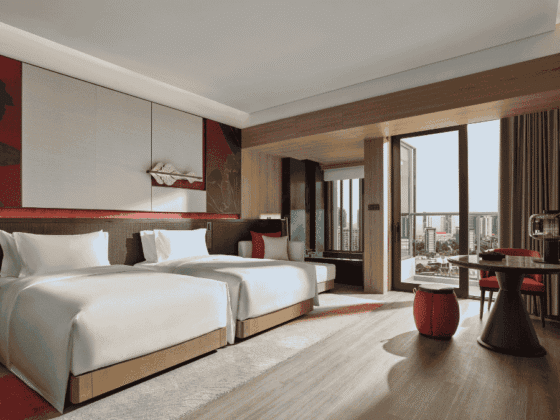
The Aesthetic: Bamboo blinds, scholar-studio desks, and Ming-style furniture create an atmosphere of “quiet luxury” long before the term became a trend.
Dining Amidst the Echoes of Opera
For many, the departure of the Aman brand sparks questions about its celebrated culinary scene. The The Chinese Restaurant (formerly the Aman Club) remains a temple to Cantonese and Imperial cuisine, while The Reflection Pavilion, overlooking the lotus pond and the Summer Palace’s ancient opera stage, continues to offer the city’s most evocative afternoon tea. There is a singular magic in sipping fine spirits while the distant sounds of traditional rehearsals drift over the palace walls.
The Future of Chinese Hospitality
With the de-branding of the Beijing property, Aman’s storied map of China now rests with its “Legendary Three”: the wetland sanctuary of Fayun in Hangzhou, the forest-bound Yangyun in Shanghai, and the high-altitude Dayan in Lijiang.
While the “Aman” name has moved on, the Beijing Summer Palace Guesthouse remains. For the traveler who values the weight of a thousand years over a brand logo, the chance to sleep beneath the same moon as the emperors of old remains as intoxicating as ever. It is not an ending, but a restoration of the palace’s original identity.